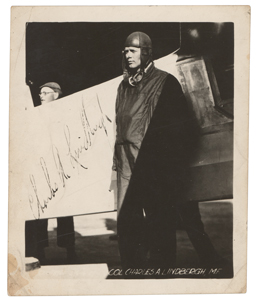
US-amerikanischer Flugpionier (1902-1974). Portraitphoto mit eigenh. U. („Charles A. Lindbergh“). O. O. u. D. 110 : 130 mm.
2.800 €
(83218)
Das Kniestück mit eigenhändiger Unterschrift („Charles A. Lindbergh“) zeigt Charles Lindbergh in Fliegermontur. Gut erhalten mit leichten Gebrauchspuren am unteren linken Bildrand. Dem US-amerikanischen Piloten Charles Augustus Lindbergh gelang im Mai 1927 als erstem die Überquerung des Atlantiks im Alleinflug. Er flog in der Spirit of St. Louis ohne Zwischenstopp von New York nach Paris. Die Presse nannte das Flugzeug, in dem der 25-Jährige die Meisterleistung vollbrachte, „fliegende Apfelsinenkiste“.
Lindbergh, der davon gehört hatte, dass ein New Yorker Hotelier einen Preis von 25.000 Dollar für den ersten Flug nonstop von New York nach Paris. Also ließ der Pilot von einer kleinen, fast bankrotten Flugwerft binnen zwei Monate eine Maschine nach seinen Vorgaben bauen: „An erster Stelle stehen Flugleistung und Maximalgewicht, an zweiter die Stabilität, an letzter mein Komfort." Es entstand ein Flugzeug aus Stahlrohr und mit Kunststoff bezogenem Fichtenholz. Es war achteinhalb Meter lang, hatte eine Spannweite von vierzehn Metern. Um Gewicht zu sparen, gab es weder eine Heizung noch ein Funk- oder Navigationsgerät. Um mehr Benzin mitnehmen zu können, verzichtete Lindbergh auf einen Fallschirm. (Quelle: BR Wissen. 2014) Der Flug machte Lindbergh zum berühmtesten Mann der Welt. Er war zwar nicht der erste, der den Atlantik überflog. Aber er war der erste Pilot, der den nonstop Flug alleine absolvierte..

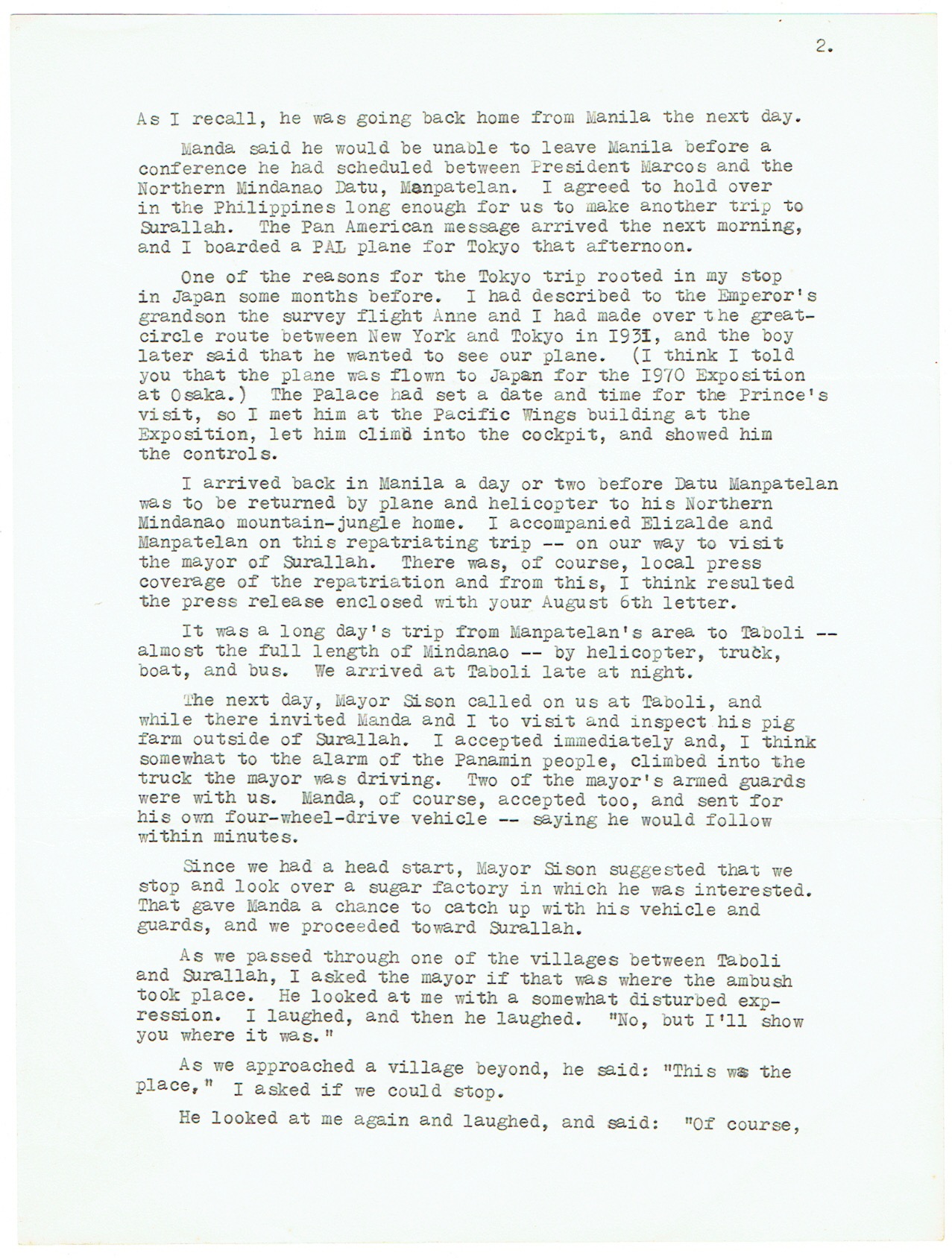
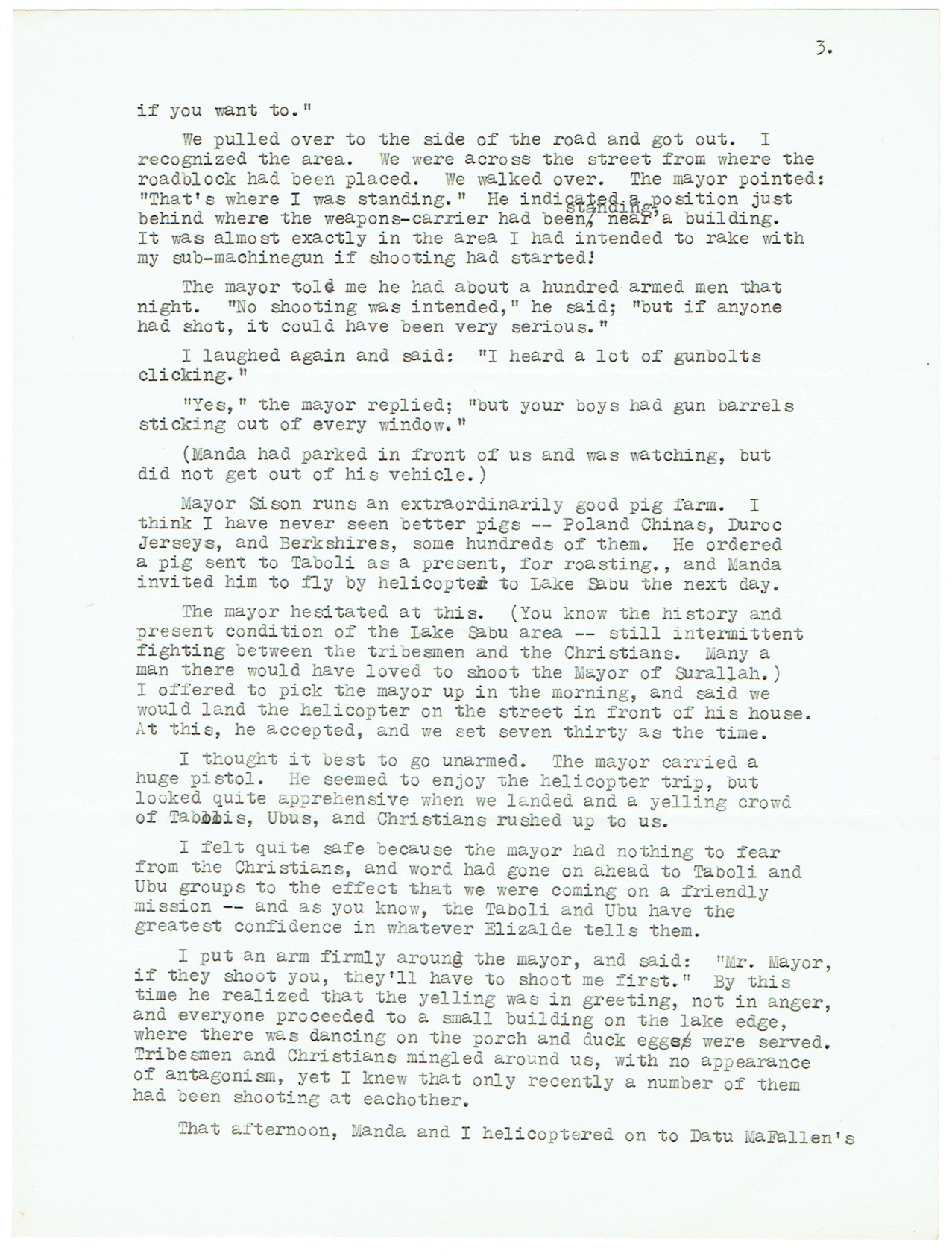


US-amerikanischer Flugpionier (1902-1974). Masch. Brief mit eigenhändiger Unterschrift „Charles“. Switzerland. 4to. 4 1/3 pp.
2.500 €
(83957)
An Alden Whitman von der New York Times. „After you left the Agta area, my schedule continued according to plan for some days. On returning to Manila, I began working on wildlife conservation activities -- a meeting of the Philippine Wildlife Conservation Foundation, a check into the present condition of the Tamaraw in Mindoro, and a trip with Jesse Alvarez to Mindanao to talk to a meeting of loggers in regard to protection of the Monkey Eating Eagle. After the meeting, in Davao, we drove several hours northwest into an isolated and heavily-jungled mountainous area where, after antoher hour on foot, we located two eagles near a previously located nest.
One of them was considerate enough to remain perched on a branch for close to an hour while we phootgraphed and observed it. […]“ Alden Whitman papers are held by THE NEW YORK PUBLIC LIBRARY..
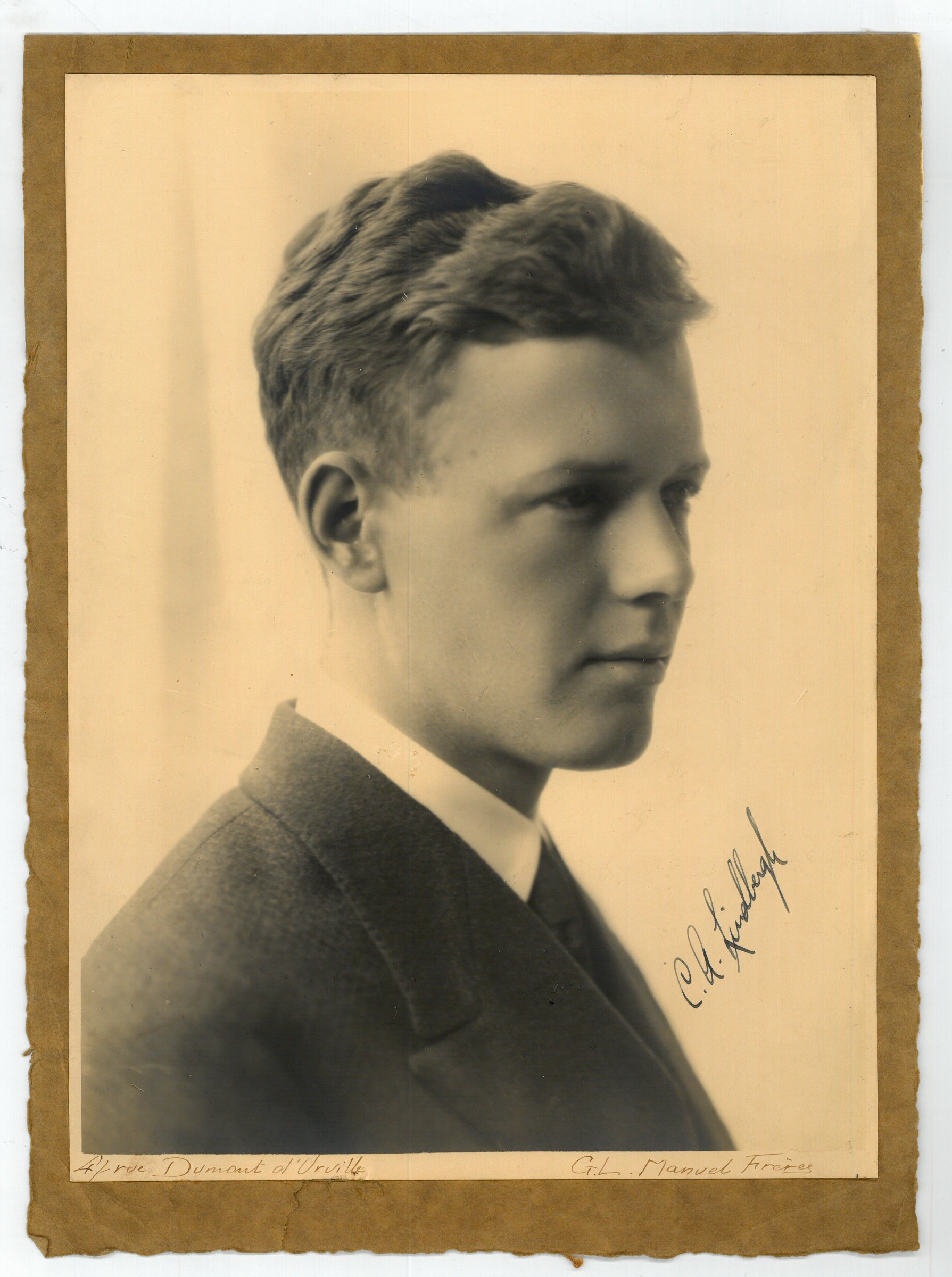
US-amerikanischer Flugpionier (1902-1974). Portraitphotographie mit eigenh. U. ("C. A. Lindbergh"). O. O. u. D. 280:205 mm. Hinter Glas gerahmt (470:380 mm).
8.500 €
(89860/BN58976)
Mit Signatur des prominenten Pariser Fotoateliers G. L. Manuel Frères an der Adresse 47 rue Dumont d'Urville.